

Eli Lilly Reports Phase 1 Ovarian Cancer Combination Results
The combination of sofetabart mipitecan and bevacizumab produced a 79% confirmed objective response rate and a 100% disease control rate in a Phase 1 cohort of platinum-sensitive ovarian cancer patients.

Eli Lilly & Co
Price target $1,317.93 +3.0% upside
Eli Lilly reported Phase 1 results for sofetabart mipitecan plus bevacizumab in platinum-sensitive ovarian cancer, with a 33-woman cohort showing a 79% confirmed objective response rate and a 100% disease control rate among 29 evaluable patients.
What happened
Eli Lilly & Co (NYSE: LLY) reported Phase 1 results for sofetabart mipitecan (Sofe-M) plus bevacizumab in platinum-sensitive ovarian cancer.
The combination produced a 79% confirmed objective response rate and a 100% disease control rate.
The Phase 1 cohort included 33 women. The response rates come from evaluable patients with measurable disease. We read these as early observations, not established clinical benefit.
Why it matters
A confirmed objective response rate of 79% or higher held in both PARP inhibitor-treated and PARP inhibitor-naive patients. Median duration of response and median progression-free survival had not been reached at median follow-ups of 6.2 and 10.2 months, respectively.
The FRAmework-01 program is evaluating Sofe-M in three global Phase 3 trials across platinum-resistant and platinum-sensitive ovarian cancer. We think those ongoing trials, rather than this cohort, could be the test of whether the combination delivers clinical benefit.
By the numbers
The confirmed objective response rate reached 79.3% among the 29 evaluable patients with measurable disease at the July 6, 2026, data cutoff.
- Six of those patients had a complete response, 20.7% of the group.
- Another 17 had a partial response, 58.6% of the group.
- Patients had received a median of three prior systemic regimens.
- 67% had received a prior PARP inhibitor.
- 70% had received prior bevacizumab.
Epistaxis (nosebleeds) and nausea were the most common adverse events of any grade, each occurring in 73% of patients.
- Neutropenia was the most common Grade 3 or higher treatment-emergent adverse event, affecting 42% of patients.
- Grade 3 or higher anemia occurred in 24% of patients.
- Dose reductions occurred in 42% of patients.
- 6% of patients discontinued treatment due to an adverse event.
- Any-grade neuropathy occurred in 9% of patients, with no Grade 3 or higher events.
Topics GlobalPharmaceuticalsStock Analysis
More analyses

KFC's Coca-Cola Switch Highlights PepsiCo's Soda Challenge
KFC will switch its U.S. beverage partnership to Coca-Cola starting in January 2027, with Coca-Cola products expected in all 3,600 U.S. restaurants by spring 2027, while PepsiCo keeps its Taco Bell and KFC International deals.
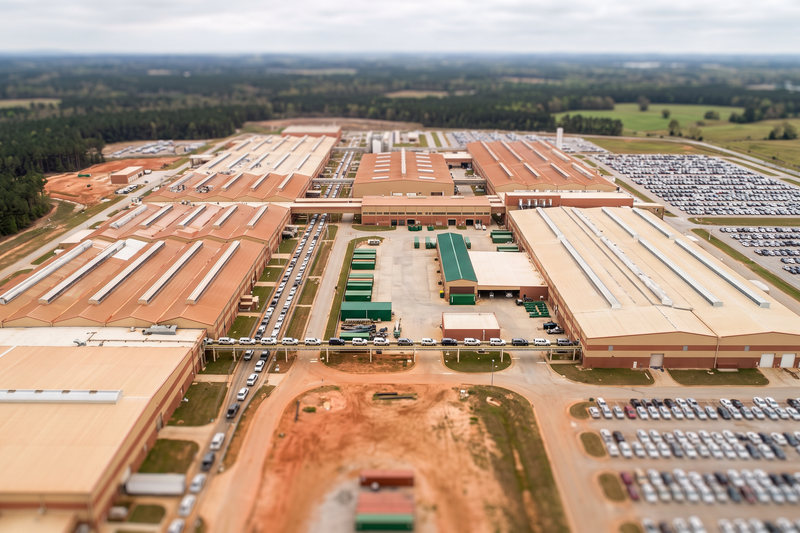
Audi Plans $4 Billion Georgia Factory
Audi plans to invest about $4 billion in its first U.S. manufacturing plant, located at the Middle Georgia Megasite near Macon. The facility would produce the Q7, Q8 and Q9 SUVs and create about 4,500 jobs, pending approval from Volkswagen's supervisory board.

Bloom Energy Jumps After Musk Flags AI Power Constraints
Bloom Energy shares rose nearly 6% in extended trading after Elon Musk said power, cooling and infrastructure are the main limits on deploying superintelligence. The stock closed at $238.53 on October 21, 2026, up 7.13% in regular trading, and has climbed more than 174% in 2026 as of October 22, 2026.